
R-01
Flight Control & Dynamics
The hard part of flight is what happens after the motors spin. We design and validate the controllers that keep a vehicle stable when the payload swings, the wind shifts, or the airframe changes shape mid-mission.
05 Research & Development
A decade of applied robotics research in autonomous flight, ground autonomy, control and perception. The Lab is not a side project. It is the engine behind every system Altax ships.
Origin & advantage
Slung-load stabilization, on-board computer vision, ground autonomy, multi-agent coordination, wind-tunnel-validated dynamics. The research came first, and the same autonomy stack now powers our aerial systems, ground robots, and the software behind them. That heritage is the unfair advantage: when a mission needs a manoeuvre no off-the-shelf autopilot can fly, we have already solved it on the bench.
Research themes
Each thread is an active line of work, and a proof that the theory leaves the whiteboard and flies.
R-01
The hard part of flight is what happens after the motors spin. We design and validate the controllers that keep a vehicle stable when the payload swings, the wind shifts, or the airframe changes shape mid-mission.
R-02
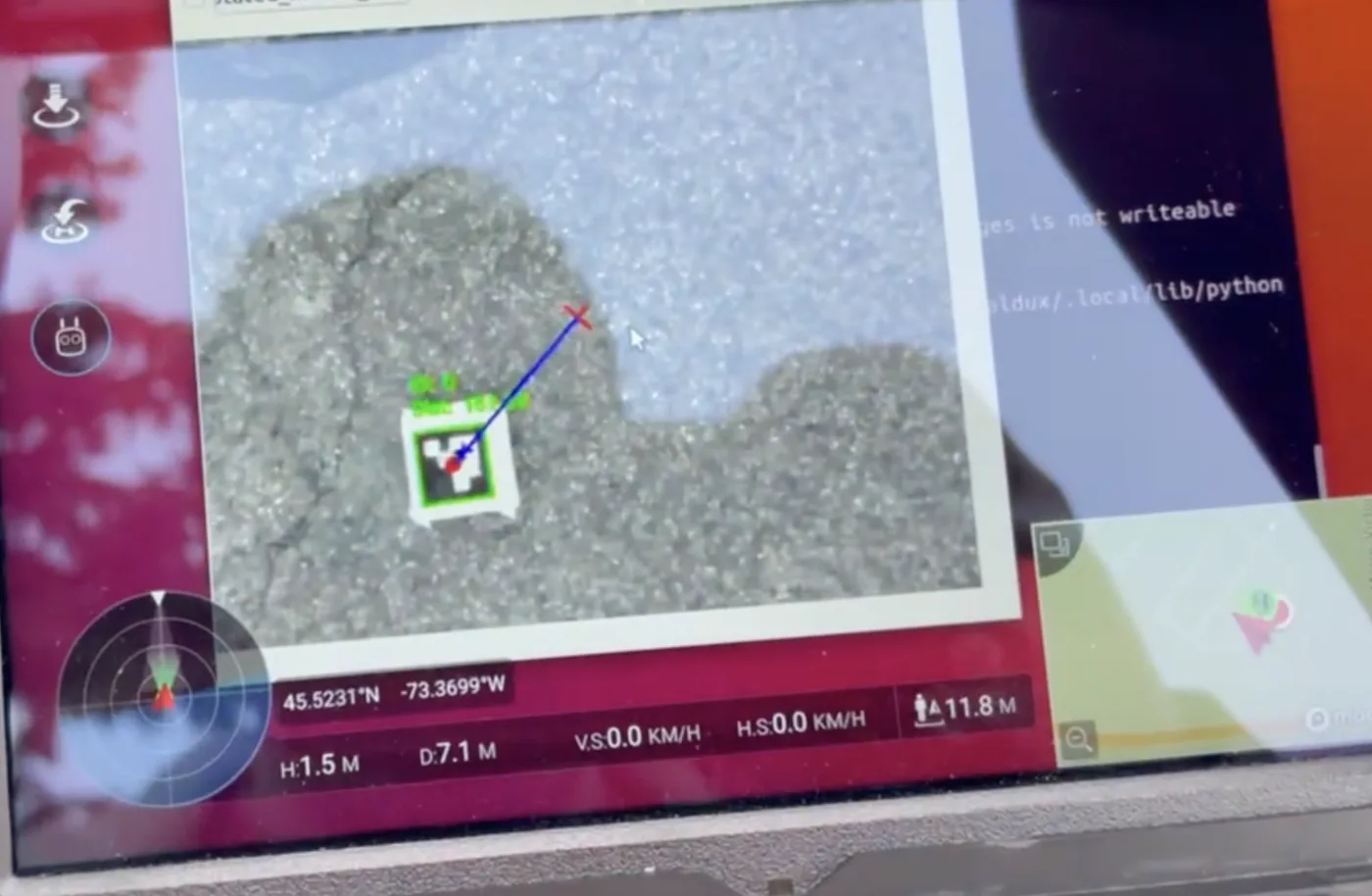
A drone is only as useful as what it understands. On-board detection, motion segmentation and visual tracking turn raw pixels into targets, tracks and measurements, in real time, at altitude, on constrained hardware.
R-03
From a single vehicle holding a centimetre-tight hover to fleets flying a coordinated plan, autonomy is the layer that removes the pilot from the loop, and the ground station that keeps a human commanding the mission.
R-04
Some trajectories can’t be hand-tuned. We use trajectory optimization and learning-based control (echo-state networks trained under CMA-ES) to discover aggressive, feasible manoeuvres that a classical controller would never find.
Flight log
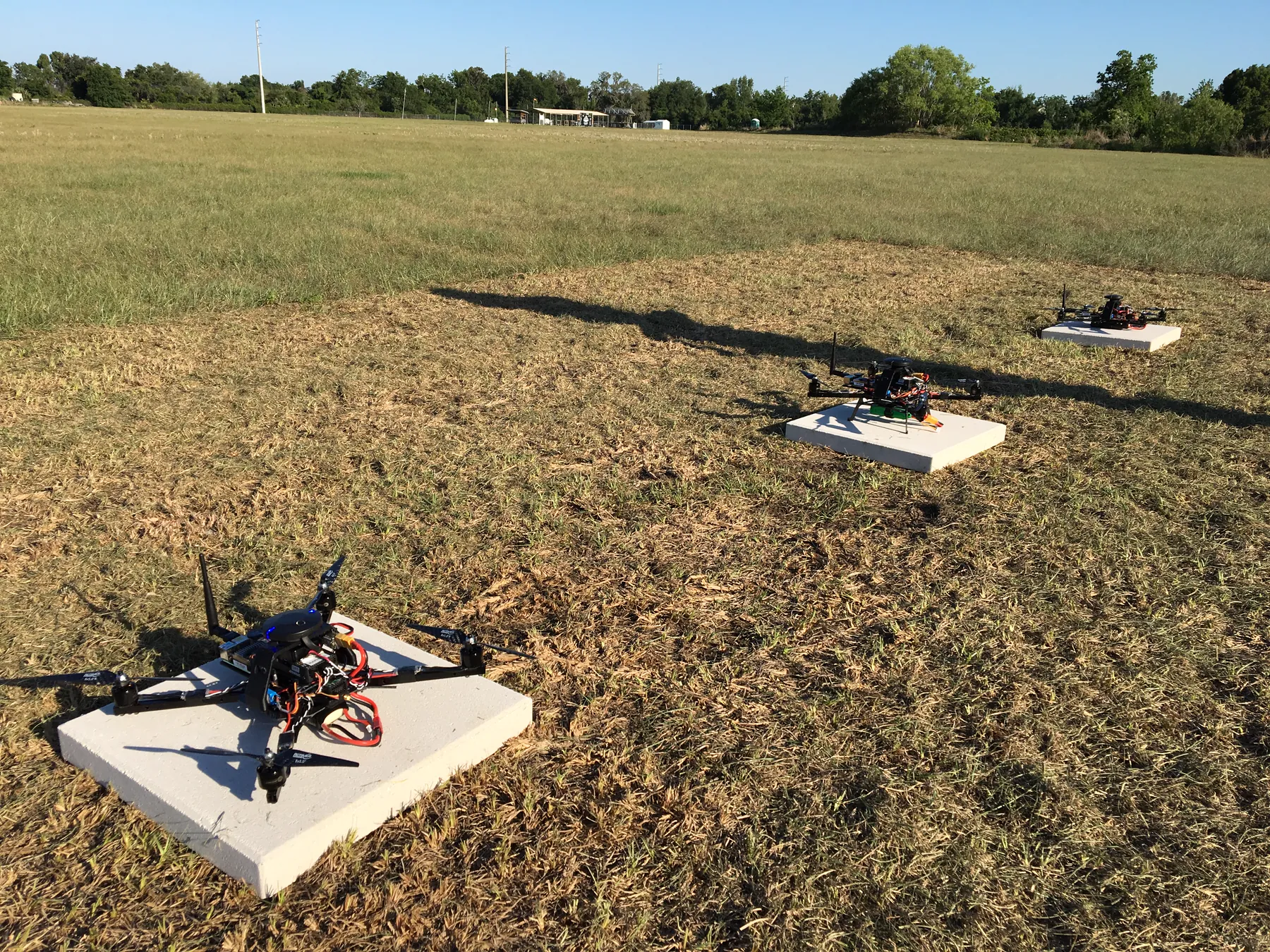
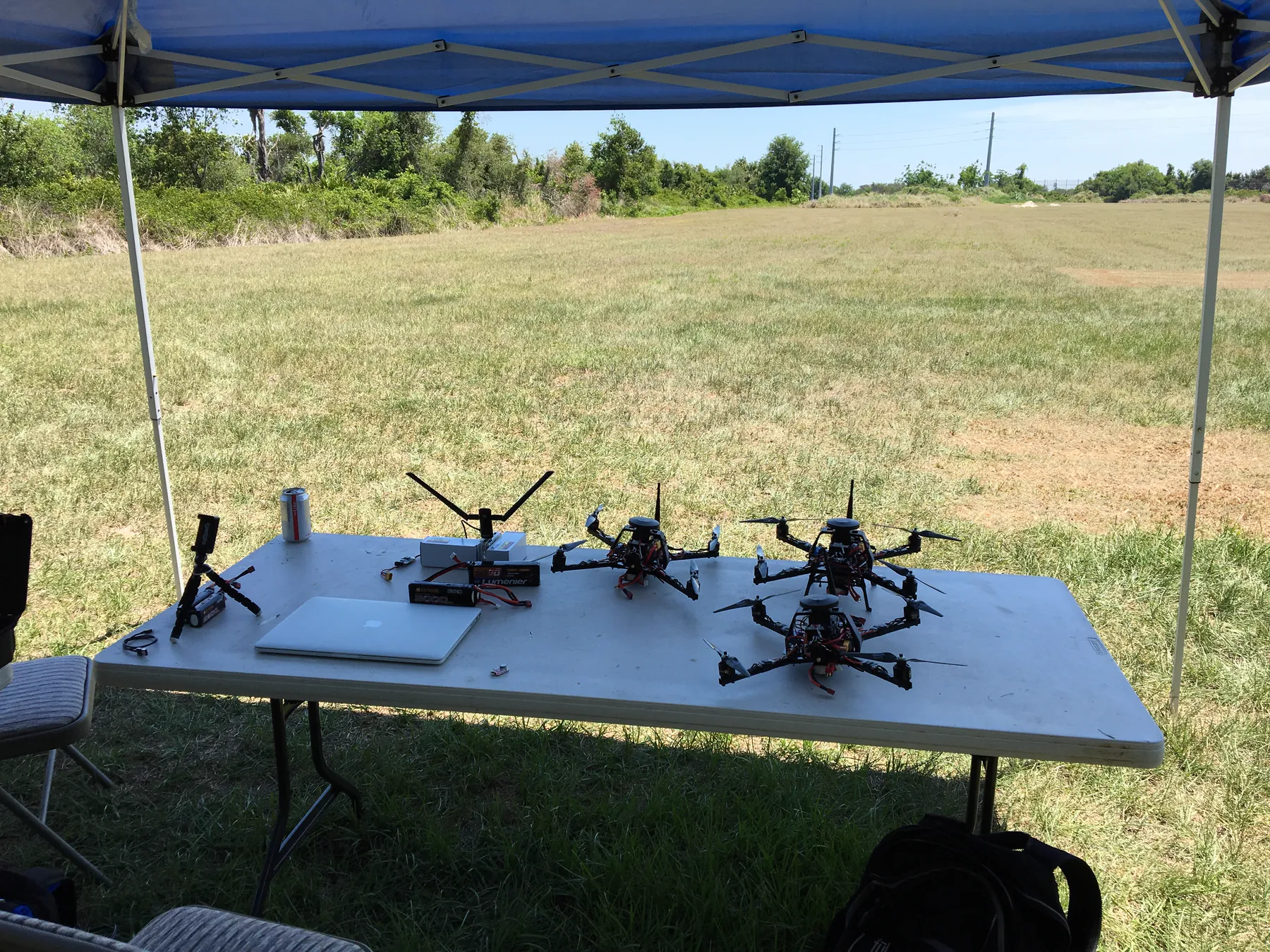
A mosaic of the missions, benches and simulations behind the research. Every cell is a real flight or test from the archive.
From the field & bench
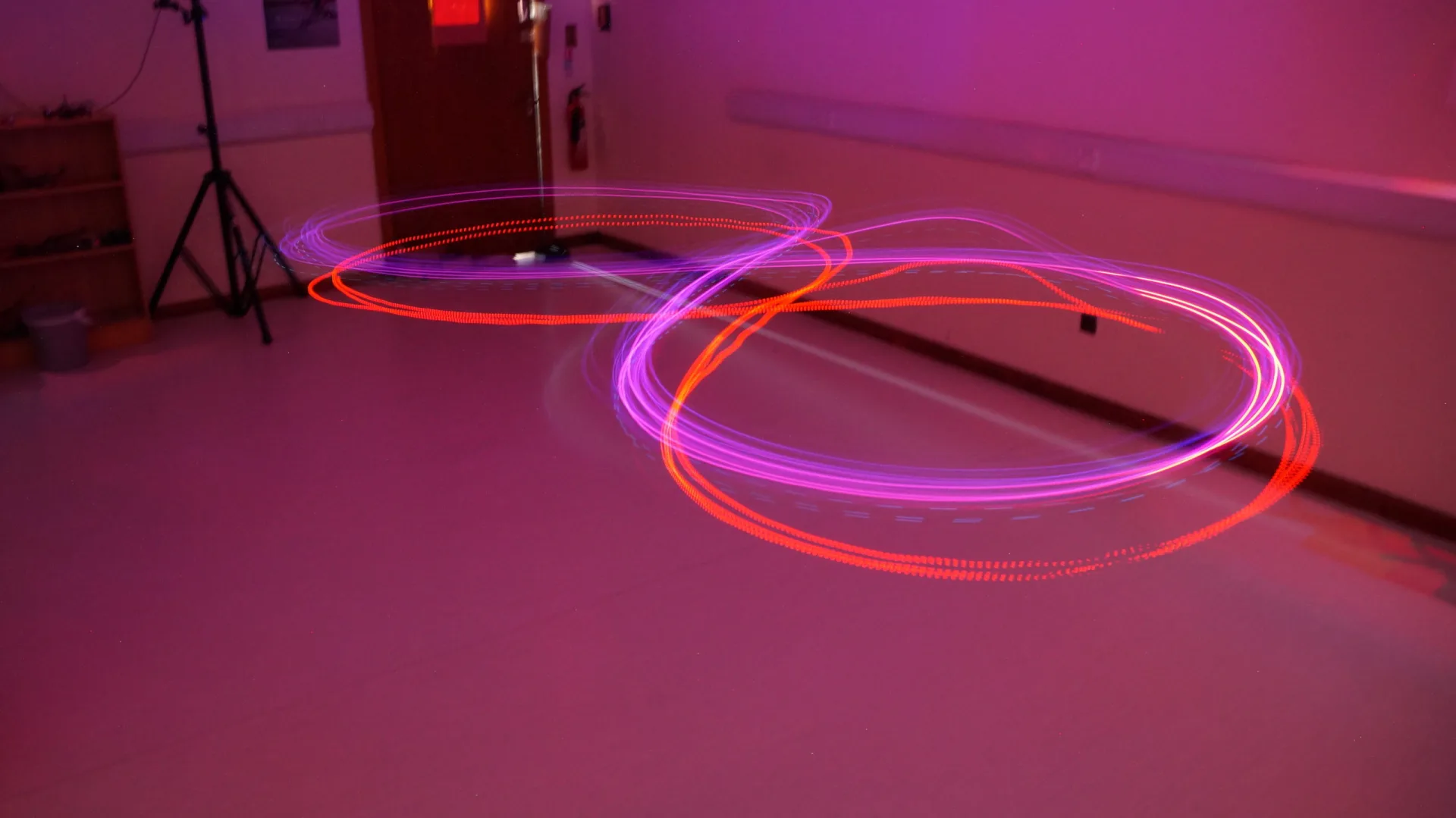
Long exposure · 30 s
Every controller we write eventually draws a line in the air.
This one held its trajectory to the millimetre.
Collaborate
We partner with research groups, integrators and operators on applied robotics, from a single hard control problem to a full autonomous system. If it flies, senses or decides, we want to hear about it.